Showing posts with label Biography Leaders. Show all posts

Sunday, April 8, 2012

James Madison,Founding Father Constitution United States


Founding Father Constitution of the United States
James Madison


Founding Father Constitution of the United States
James Madison is the American political figures and President of the United States to-4 In office March 4, 1809 - March 4, 1817 to replace Thomas Jefferson. He was one of the Founding Fathers of the United States. James Madison was born in Port Conway, Virginia, on March 16, 1751. He was studying literature, philosophy, theology and the foundations of government at the University which is now known as Princeton University, New Jersey.


After graduating from university, he continued his studies in law and philosophy at home. Prior to his presidency, he has had many memorable experiences, such as; chairman of the revolutionary committee in Virginia, the Virginia convention delegates proposed that the formation of the Continental Congress, a member of the Continental Congress and helped prepare and certify the first 10 amendments of the Constitution of the United States. These amendments became known as the Charter of Rights Azazi, which among other things, guarantees freedom of the press and freedom of speech in the United States.


Due to prepare and adopt the role of the U.S. Constitution, James Madison is called the "Father of the Constitution". During the Convention drafting the constitution takes place, every day of James Madison made the most important records of the activities - activities of convention. He also became secretary of state under President Thomas Jefferson. As secretary of state, James Madison pursue the purchase of Louisiana territory from France. The county stretches from the Gulf of Mexico in the south to Canada in the north, and east of the river Misisipi, to the Rocky Mountains in the west. Purchases made in 1803 it made the United States more than two figures Scientists Inventors - Founding Father of the Constitution of the United States - Leaders Scientists Inventors times its original extent. James Madison comes from the Democratic-Republican party, he served as vice president was accompanied by Elbridge Gerry.


Early in his presidency, he faced a showdown with the United Kingdom, where British holding American ships trading with France. Britain also refused to recognize the citizenship sailors - American sailors and arming the Indians who attacked the western border of the United States. In 1812, the dispute is finally flared into war. In this war, in 1814, Francis Scott Key put poetry on the American national anthem, "The Stars-Spangeld Banner", when he witnessed the bombardment of a fort in Baltimore. In 1815, in the same war, Andrew Jackson (who later became President of the United States which to-7) became a political force. As a President, James Madison was a "strict interpretation", that is, those who oppose free interpretation of the Constitution. He managed to set a duty to protect the U.S. industry, the construction of roads and canals throughout the country, and building a strong military organization. After his term ended in 1817, James Madison left the White House checkers sort the notes - the famous notes on the constitutional convention.


James Madison has always opposed the influence of rights - rights that threaten the unity of the state of the federal state. In 1826 he became Rector of the University of Virginia. James Madison died in 1836. In a note opened after his death is written, "The advice that comes from my conscience is most in; to the union - the union - the American states are maintained and perpetuated." James Madison died at Montpelier, Virginia, June 28, 1836 at the age of 85 years.

Emperor Hongwu, The founder of the Ming Dynasty Emperor


Emperor Hongwu
Emperor Hongwu


The founder of the Ming Dynasty Emperor
Emperor Hongwu (Hanzi: 洪武, born in Fengyang, Anhui Province, 21 September 1328 - died June 24, 1398 at age 69 years), whose real name Zhu Yuanzhang (朱元璋), is the founder and first emperor of the Ming Dynasty in China. He became emperor and established his dynasty after successfully overthrew the Yuan Dynasty (Mongol). In the history of China, Zhu Yuanzhang is one of the two emperors who came from among the common people (the other is Liu Bang / Gaozu Emperor Han, founder of the Han Dynasty). He was a controversial emperor, on the one hand he is concerned the welfare of their people and strive to improve their lives, but he was also a tyrant who castrated freedom and kill the people who helped him rise to the suspicion of potential power grab his throne.


Zhu was born in Fengyang, Anhui Province of poor farm families with the name Zhu Chongba (朱 重 八). In his youth worked as cattle herders. Because exposure bake and eat an animal that, his master fired him. An outbreak of disease when it attacked his village and killed the parents and siblings. Later he became a monk at the Temple Huangjue just to make a living in the midst of the famine at the time. In the monastery that he began learning to read and write, but soon the monastery was closed due to lack of funds so that he should live again Ramanujan are displaced as a beggar. In the midst of a wave of anti-Mongol who was then emerging in China, Zhu joined the Red Turbans Uprising, a rebellion group-based anti-Yuan blend religious teachings such as Buddhism, Zoroastrianism and other religions.


He worked under the command of Guo Zixing. Thanks to his skill, in a short time he has gained an important position in the group. Since then he changed his name to Zhu Yuanzhang. Zhu married the adopted daughter of Guo, Ma Xiuying (later became the first consort of Ming). He is often associated with Confucian scholars and landlords, of whom he received lessons on ways to manage the country, while from the Red Turbans he learned a lot about the military. Zhu began to abandon Buddhism and switch Reference Biography: on neo-Confucianism and Confucius. Poor children who had become monks, beggars, and thieves that have now been transformed into anti-Yuan rebel leader whose reputation was renowned throughout the country.


His charisma attracted talented people from all over the country to work for him. The year 1356 he made Yingtian (now Nanjing) as a base. His first step was to conquer his fellow leaders of the anti-Yuan Chinese rivals and unite the south, then the Mongol face. Year 1363, he defeated Chen Youliang, its biggest rival in China to unite, in the Battle of Lake Poyang. Then followed years of 1367 to defeat Zhang Shicheng in Suzhou. With the slogan "expelled the Mongols and restore the glory of the Chinese" he won the support of the Han people who really hate the Mongols who had invaded them for about a century. January 23, 1368, Zhu himself as emperor by the name of Emperor Hongwu, the dynasty named Ming (which means bright) and Nanjing was the capital of his kingdom.


In July the same year, he sent Xu Da, the right hand as well as his friend, to invade the capital of Yuan, Dadu (now Beijing) and succeeded in forcing the last Yuan emperor, Emperor Shun of the Yuan, fled to the north. China again ruled by the Han under the banner of the Ming Dynasty. Hongwu's first empress, Empress Ma was a lot of influence in his life, a wise woman. Once upon a time Hongwu catch some people are making a puzzle that offensive bemaksud Empress Ma and sentenced them to death, but the empress so pardon them freed Hongwu. There are theories that say the death of Empress Ma Hongwu years of 1382 affect the character to be hard and easy uncontrolled people to death with trivial reasons. In addition to the Empress Ma, Hongwu also has a number of concubines, some of whom are Korean women, who sent to him by King Taejo of Joseon (Yi Seonggye) to mark the partnership between China and Korea are also new break away from the influence of the Mongols. From the results of his marriage he was blessed with dozens of boys and girls. When it died in 1398, he was succeeded by his grandson because his eldest son Zhu Yunwen (Zhu Biao) who should ascend the throne died young in 1392. Hongwu had some fake graves in order to prevent destruction by his political opponents and theft by tomb raiders. The original tomb was discovered in the Qing Dynasty in Zijin Mountain, Nanjing.

Friday, April 6, 2012

Giovanni Gronchi.President Republic of Italy to-3

Giovanni Gronchi
Giovanni Gronchi


Giovanni Gronchi Biography
Giovanni Gronchi (10 September 1887-17 October 1978) is an Italian politician who became the second President of the Republic of Italy from 1955 to 1962, replacing Luigi Einaudi. His presidency was marked by a controversial and failed attempt to create an "openness to the left" in Italian politics.


Early life and political career

Gronchi was born in Pontedera, Tuscany, and is one of the first members of the Christian movement, founded the Catholic priest Don Romolo Murri in 1902. Gronchi get his first title in literature and philosophy at the Scuola Normale in Pisa. Between 1911 and 1915 he worked as a high school teacher for classical subjects in a number of Italian cities (Parma, Massa di Carrara, Bergamo and Monza).


In World War I he became a volunteer and after the war ended in 1919 he became one of the founders of Italian People's Party (PPI) are Catholic. He was elected to the parliament to Pisa in the second parliamentary elections in 1919 and 1921. He became a union leader in the Italian Confederation of Christian Workers, and in 1922-1923 he became Junior Minister for Industry and Commerce in Mussolini's first government. But in April 1923, the People's Party's national conference held in Turin decided to withdraw all government representatives from the PPI. He returned to his old role as the leader of the Catholic union, and trying to deal with the daily violence inflicted by fascist units.


In 1924, after Luigi Sturzo resigned from his post as Secretary of the PPI, Gronchi became leader of the party, together with two members of the "triumvirate" (triad) Other, (Spataro and Rodino). Gronchi was re-elected to Parliament in the same year, then joined the opposition anti fasisi of what is known as the Aventine movement (from the hills of Rome where the opposition to resign from Parliament). In 1926 he was fired by the new regime of parliament.
Between 1925 and 1943 he interrupted his career. To shy away from having a member of the Fascist Party, he also resigned from his position as a school teacher, and seek a living by developing a career in business, first as a salesman and later as an industrialist.

After World War II

In the 1943-1944 he became one of the founders of the Christian Democrats (DC) are new, and became a leader of the leftist faction, along with the likes of Giorgio La Pira, Giuseppe Dossetti and Enrico Mattei (later to become boss ENI , the Italian government-owned petrochemical giant). He is also a member of the Liberazione Comitato Nazionale, multi-party committee of the Italian Resistance, as the representative of his party.
Although often conflict with the majority of the members of his party and his secretary, Alcide De Gasperi, Gronchi served as Minister of Industry in 1944-1946 and as a member of the Constituent Assembly in 1946. In 1947, when the Cold War began, he was adamantly opposed to his party's decision to expel the party and the Socialist-Communist Parati Italy nasinoal of government. From 1948 until 1955 he was elected as President of the Italian House of Representatives (Lower House of Parliament).

President of Italy

In 1955 Luigi Einaudi tenure as the first President of the Republic of Italy ended, and Parliament must elect his successor. The new secretary DC, Amintore Fanfani, Cesare Merzagora promote a liberal for the job terseubt. At that time served as Chairman of the Senate Merzagora. However, the extreme right-wing party - led by Giuseppe Pella, Guido Gonella, Giulio Andreotti and Salvatore Scoca - join a trade union group left - led by Giovanni Pastore, Bo and Achille Giorgio Marazza - in a "rebellion" against the party leadership, to choose Giovanni Gronchi ("one parliament"). This effort has the support of Communist parties and the Socialists, and also of the right group of monarchists and neo-fassis. After a fierce struggle and the collapse of the front-centric, on 29 April 1955 Gronchi was elected President by 658 votes of 883. He was the first Catholic politician who became head of the Italian State.


His tenure lasted until 1962, and is characterized by the ambition to do the "openness to the left" in stages. With this approach, it is expected the Socialists and the Communist Party (which still Stalinists) will be invited back into the national government, and Italy would leave NATO, as well as being non-Bloc countries. But there is strong opposition from the parliament, particularly from the Liberal Party, a minor, which is considered an essential part of any majority.

In an effort to get out of this jam, in 1959 Gronchi appoint as Prime Minister a trusted member of the Catholic left-wing faction of his own, Fernando Tambroni, sent him to Parliament, with a "President", but without the majority of which have been terancang. But Tambroni was last in Parliament only through the support of the neo-fascist vote. "Openness to the left" that is not foreseen this raises serious consequences. In 1960 serious riots occurred in several Italian cities, especially in Genoa, Reggio Emilia and Licata. Police fired on demonstrators and causing five people menigngal world. Tambroni reign came to an end with the name of the defect: forced to resign, and replaced by a fully government dominated by Christian Democrats, the parliamentary majority that traditionally centrist.


Tambroni experiments which do not tarnish the reputation of this menggembirkan Gronchi forever, and until the end of his term he remains a weak president. In 1962 he tried to get a second mandate, with the strong help of Enrico Mattei, but this attempt failed and Antonio Segni elected. When he is no longer a head of state, he was a Senator for life, according to the Italian Constitution. He died in Rome on October 17, 1978 at an advanced age, 91 years old.

Consideration

For a thorough consideration of the historical period of his presidency, we must remember Tambroni failure, with his proposal for an authoritarian approach. But "openness to the left" as is memangt erjadi shortly after its mandate expires. Indeed, the first center-left coalition formed by Aldo Moro in 1964, when the Socialists (but excluding the Communists) entry into the government. In the 1970s, the Christian Democrats and the Communists tried to reach what is called Historic Compromise. Based on this, he may be praised for having the foresight that is important, and influences that affect long.


However, it is difficult to say that the political project actually closely related to the governments of the left-center which alternated in power between 1964 and 1992. In most of this period, the Communists increasingly kettat isolated than ever before, because of their defeat upon their former Socialist allies and because of the bitter conflict that followed them, especially after a Socialist leader Bettino Craxi. Pengaru-proven external influences come into play later as well. A Parliamentary report of 2000 concluded that illegal operations by Gladio "who stayed behind" supported by the U.S. are designed to "stop the PCI, and to some extent also the PSI (Italian Socialist Party), to elicit the executive power in the country. " After all, Italy to maintain the socio-economic structure as a market economy and foreign policy line.

Luigi Einaudi,President Republic of Italy to-2

Luigi Einaudi
Luigi Einaudi


Luigi Einaud Biography
Luigi Einaudi (March 24, 1874 - 30 October 1961) is a politician and economist Italy. He served as President of the Republic of Italy between 1948 to 1955.

Background

Einaudi was born in Carru, Cuneo Province, Piedmont. He completed his university in Turin, where she met socialist thinking and working with the magazine Critica Sociale diarahi by socialist leader Filippo Turati. In 1895 he graduated from university in law and later was appointed professor at the University of Turin, Turin Polytechnic University and University of Bocconi in Milan.

Early political career

From the beginning of the 20th century, Einaudi increasingly trending to a more conservative stance. In 1919 he was appointed as a senator Kingdom of Italy. He also worked as a newspaper reporter important in Italy, such as La Stampa and Il Corriere della Sera as well as financial koresponded for The Economist. He stopped working for the Italian newspaper since 1926, continued relationships with Corre della Sera profesionalya after the fall of the regime of fascism in 1943.


President of the Republic of Italy

On May 11, 1948 he was elected as President of the Republic of Italy is second. At the end of the seventh year as president, he became a Senator for Life.
Einaudi is a member of various cultural institutions, economic and universities. He also was a supporter of federalism for the European dream. He also manages activities in Dogliani garden, where he implemented the most advanced agricultural development his day.
Luigi Einaudi died in Rome in 1961.

Thursday, April 5, 2012

Franz Josef Popp-Founder- BMW AG

Franz Josef Popp
Franz Josef Popp
Franz Josef Popp (January 14, 1886 in Vienna, July 29, 1954 in Stuttgart) is one of three men who founded the company BMW AG and BMW AG's first Managing Director from 1922 to 1942.
Several other names were included in the "inventor" of BMW AG. Without the presence of Karl Rapp, Gustav Otto, Max Friz or Camillo Castiglioni, this company probably would never have formed. However, Franz Josef Popp can claim him because he is developing a company that we know today. He is the "Director" of the company since its formation until he was forced to resign from office in 1942.


Early years

Popp was born in Vienna in 1886 and in 1901 his family moved to Brno where he completed his university entrance qualification at a local grammar school. He went on to study electrical engineering at the Technical College and local and qualified with a degree in engineering in 1909.


When he returned to Vienna, Franz Josef Popp joined the Viennese company AEG-Union as an electrical engineer. He soon became head of the department for "Electric Railway and Locomotive", and one of its responsibilities is to develop electric locomotives for the Mittenwald railway. At the beginning of World War I, Popp joined the Kaiserliche und Konigliche Luftfahrtruppen or "Kuk Luftfahrtruppen" (Austro-Hungarian Imperial and Royal Air Army) as a marine engineer at the base of Pula on the Adriatic Sea (in modern Croatia). This is where he has spent his military service as a volunteer for one-year course of study.


However, three weeks later he was ordered back to Vienna to supervise construction for the production of aircraft engines, initially at AEG and then in the Austro-Daimler works in Wiener Neustadt. In this capacity, Popp traveled to Germany several times to visit the largest aircraft engine manufacturer in the Reich-Daimler, NAG and Benz. The aim is to explore opportunities for prototype production under license in Austria-Germany Daimler works. Unfortunately, exploratory talks came to nothing. Austro-Daimler works continue to develop their own new 12-cylinder engines for the Navy Austria, although there is no sufficient capacity available for production of these machines. It was necessary to find a production facility that is in a position to manufacture the machines in the amount needed by the military. While he was serving in Pola, Popp had to know Motorenwerke Rapp (Rapp Engine Works) in Munich. This company has the necessary skilled manpower and production facilities to manufacture aircraft engines, but do not have a competitive product since the engine does not work as aircraft engines.


Given this scenario, Popp regarded Rapp Engine works as an ideal production facility for the manufacture of 12-cylinder Austro-Daimler engine. He lobbied for this solution and managed to convince the authorities responsible for taking his advice. In 1916, he was sent to Munich as a representative of the Austrian Navy to oversee the production under license in Motorenwerke Rapp (Rapp Motor Works). However, Popp worry about unsatisfactory decisions and targets set by the technical and commercial manager. He became concerned that the volume specified in the contract will not be met. To ensure compliance with production targets, Popp effectively began to take the role of factory manager. Popp ensure that Max Friz, a highly talented young engineers at Daimler have just applied for a position, was hired by the Rapp (Friz and Rapp were colleagues together at Austro-Daimler). Popp understood that Rapp Motorenwerke is required of a chief engineer with new ideas to make aircraft engines.

"Director General"


After the success of the BMW IIIa aeromotor, Karl Rapp was decided that the contract was terminated by the managing board of Rapp Motorenwerke.Franz Josef Popp was appointed as managing director of the company, while at the same time, the company name was changed from Rapp Motorenwerke be Bayerische Motoren Werke GmbH. This is meant to signify a new beginning with the outside world.


After conversion into joint-stock company, he was head of Bayerische Motoren Werke as Chairman of the Management Board and the Director General of the title. At the end of the First World War, Popp was responsible for turning young companies from aircraft engine production to peacetime production. With this goal in mind, he worked to create a link with Knorr Bremse AG, and from 1919 onwards, the factory started manufacturing Knorr brakes for Railway Bavaria. In 1922, Popp is responsible for transferring the most important patents, machinery and personnel to manufacture the machine "with the umbrella Bayerische Flugzeugwerke AG", together with the name of the company "Bayerische Motoren Werke AG". He was assisted in this effort by the Austrian financier Camillo Castiglioni. In this way he was able to free himself from Knorr Bremse AG and started the construction of the machine once again.

Wednesday, April 4, 2012

Mizan Zainal Abidin of Terengganu Biography

Mizan Zainal Abidin
Mizan Zainal Abidin
Al-Wathiqu Tuanku Mizan Zainal Abidin Billah Ibni Al-Marhum Sultan Mahmud Al-Muktafi Billah Shah (born in Kuala Terengganu, January 22, 1962, age 50 years) was the 16th Sultan of Terengganu as well as the Yang di-Pertuan Agong (the King of Malaysia) to -13, reigned from December 13, 2006. He was married to Queen Nur Zahirah and father of four children. On 26 April 2007, he ditabalkan as the Yang di-Pertuan Agong to-13 in full traditional ceremony at the Istana Raja Malay States, Kuala Lumpur. Tuanku Mizan Al-Qur'an kissed gold and gold dagger touched to his forehead as a symbol of power. He then stated pledge to govern with justice, abide by laws, and maintain the religion of Islam.

Education and career

He received a common education in Terengganu before later moving to Australia to continue their education in secondary schools Geelong Grammar School. In the mid-1980s, he was educated in the UK military. In 1988, he graduated from the U.S. International University-Europe in London with a Bachelor of Arts degree in foreign relations. After that he had worked at the Economic Affairs Unit Designer (UPEN) and Kuala Terengganu District Land Office.


Sultan

In 1979, he was appointed Crown Prince of Terengganu. For two weeks in 1990, he had become the official Sultan Terengganu. On May 15, 1998, he became the Sultan of Terengganu. From April 1999 until elected as the Yang di-Pertuan Agong, he also was Deputy Yang di-Pertuan Agong. He was elected as the Yang di-Pertuan Agong in November 2006 and took office on December 13, 2006. Of office will expire on December 13, 2011. He will be replaced by the Sultan Abdul Halim Shah Mu'adzan who was also the Yang di-Pertuan Agong fifth period 1970-1975.

Abdullah Ahmad Badawi Biography

Abdullah Ahmad Badawi

Abdullah Ahmad Badawi


Abdullah bin Haji Ahmad Badawi, or Mr. Badutuwi (born in Head Boundary, Penang, Malaysia, 26 November 1939; age 72 years) is the current Prime Minister of Malaysia ini.Perdana Minister Abdullah also was President of the United Malays National Organisation (UMNO), a political party in Malaysia's ruling. He also led the parliamentary coalition Barisan Nasional government. He is unofficially called Pak is or Mr. Clean. He replaces Dr Tun. Mahathir bin Mohamad.
He is also Chairman of the Organization of Islamic Conference (OIC).


Abdullah was born to an important family in Boundary Head, Penang. He received his Bachelor of Arts in Islamic Studies from the University of Malaya in 1964. After graduation, he joined the Diplomatic Corps, Government and Malaysia (the official name for civil servants). He stood down in 1978 to become a member of parliament for the constituency head boundary, which he still held to this day.


Abdullah unofficially called as Pak lah. The Government of Malaysia has issued a statement that the prime minister should not be referred to these calls in the official articles and mass media, but the nickname is still used unofficially. Abdullah is also the chairman of the Non-Aligned Movement, and has held the job since he took office as prime minister.


The government's decision on the termination of his leadership several mega-infrastructure projects, including a bridge to Singapore to make Mahathir Mohammad irritated. It boggles the Malaysian society and create a feeling of worry given the position of Mahathir who received the title of "Tun" after no longer prime minister. Observing such a step, on June 19, 2006, the party UMNO supreme council unanimously declare full support measures as prime minister Abdullah Badawi.


Harakah in January 2007 newspaper photograph showing the hand in contact with Michelle Yeoh in a dinner party in a sailboat race in Terengganu month of December 2006. Government officials confiscated opposition newspapers Se-Malaysia Islamic Party is of the shanties in the palm. However, officials stated that the foreclosure is done because the paper should be circulated only among party members only.

Controversy

After a motion for accusing prominent people such as Eric Chia and Isa Abdul Samad with corruption, government efforts to eradicate corruption Abdullah is said to be less transparent. He is still debated as there continues to fight corruption Abdullah secretly or he has deliberately slowed efforts in eliminating corruption. Although Abdullah said that he mengalu-alukan or critical comments that helped improve the administration, he has given warnings to Mukhriz Mahathir who mengkritis economic policy in the great meeting of UMNO, 2006. He also tried to guard the sources, Äúbawah ground, Äù as web sites, forums and blogs, which they regard this as mengkritisnya through media, Äúorang without credibility, Äù.


Controversy over Mahathir

In 2005, he has said that under the Abdullah administration, there was a significant increase in-KES KES kronism regarding the provision of import permit (AP) for cars made outside Malaysia. Mahathir has said the former government investigation into the issue. Later, Mahathir Abdullah for canceling mengkritis many development projects commenced by Mahathir, for example the construction of a bridge to replace the contact kosway Malaysia and Singapore. Mahathir also said that Abdullah had been originally given to the graduation Republic of Singapore Air Force to fly to Malaysia and the region to sell sand to Singapore in exchange for an agreement for the construction of the bridge.


In 2006, Mahathir continued critical of Abdullah, alleges that Media freedom under the Abdullah telahpun berkurangan. Mahathir also reluctant to broadcast media bahawa add comments Mahathir. Mahathir has blamed Abdullah for breaking promises made by Abdullah on policy concerning the kingdom and the most powerful critical until now, said that Abdullah had betrayed her trust. Upset Mahathir chose Abdullah as his successor and said he originally wanted bahawa timbalan Abdullah, Najib Tun Razak to succeed him. Najib who was on an official visit to India, immediately expressed support for Abdullah infinity.


Recently (when in October 2006), Mahathir blames Abdullah for the practice of a deceptive nature. [6] It started when Abdullah was reported to have problems with effective decision making. By that, he was always a problem when the decision caused controversy among the people of Malaysia. One example is the decision to cancel construction of a bridge that should replace the Singapore-Johor Kosway. In his announcement, he always uses the word, Äúrakyat, Äù, with regard bahawa all the people supporting all of its decision without hesitation.


Critical have compared with the government of Mahathir Abdullah administration, Mahathir bahawa mencadang is more glorious in perpetuating harmony among ethnic groups in Malaysia.
Abdullah is also often criticized by bloggers and the media outside the country of Malaysia due to the critical sentiasa silence against him. He has vowed to crack down hard on the pro-democracy protester and gave to the police to eliminate sokongannya protest and arrest participants in the protest. a has been followed by a series of media restrictions regarding some of the pro-democratic societies such as the Association Net securely held in 2007 on 10 November 2007. Media are escorted by the royal Tempatan Malaysia did not broadcast it (with) while he was out of state diperihalkan by the media like Al-Jazeera, Reuters, BBC and CNN. Abdullah later said that he never dicabar.

Mahathir Mohamad-Prime Minister of Malaysia four


Mahathir Mohamad
Mahathir Mohamad
Tun Dr. Mahathir bin Haji Mohamad (Mahathir bin Mohammad also, born in Alor Star, Kedah, Malaysia, December 20, 1925, age 86 years) is a Malaysian politician. He was the fourth Prime Minister of Malaysia, serving from July 16, 1981 until October 31, 2003. Under his leadership Malaysia's rapid modernization and prosperity enjoyed in all strata of society.
His father was Encik Mohamad bin Iskandar and his mother was daughter of Wan Wan Hanafi Tempawan. Mahathir Mohamad was born in a house in Lorong Kilang Ais, Seberang Perak, Alor Setar, Kedah. Mohamad is the ninth child.

He is responsible for Datuk Seri Anwar Ibrahim dismissed from all positions in the royal and political party UMNO in 1998. Tun Mahathir bin Mohamad retired on October 31, 2003 and raised Datuk Seri Abdullah Ahmad Badawi as Deputy Prime Minister in his place.
Mahathir Mohamad quit and was replaced as Prime Minister of Malaysia Abdullah Ahmad Badawi on October 31, 2003.


Criticism

He was diligent in promoting the country as an Islamic country by stating, "Islamic Law or the law syaro 'enforced in Malaysia to take into account the state of the country's diverse and diversity is a central piece of justice in Islamic Law." He also refers to the Islamic State in Cordova, Spain pluralistic society. Even so they are not. Practice of secularism, capitalism lives scattered in there with a new year party with scantily clad dancers at the famous night clubs in Kuala Lumpur. There is also a place of gambling in the Genting Highlands. Malaysia does not require muslimahnya veiled. Additionally important figures and rulers denied if the country is an Islamic state, like Tunku Abd. Rahman's son, the father of Malaysian independence.


After the retreat held

He admitted disappointment has chosen Abdullah Ahmad Badawi as UMNO leader and prime minister to replace him. Led to increasingly harsh criticism and difficult to resolve. The Star newspaper quoted him as saying on July 27, 2006 about his new job than to criticize. He opened a bakery called The Loaf in Langkawi, Malaysia. The Loaf is a joint venture with Japanese companies. He holds 51 percent stake in the name of M & M Resources Sdn Bhd Concolidated. Bakery plans to open a branch in Kuala Lumpur, Phuket, and Singapore. Before plunging into politics, he has run the business of health clinics and gas stations.
He announced his resignation from Umno on May 19, 2008 to press Badawi that he resigned from office.

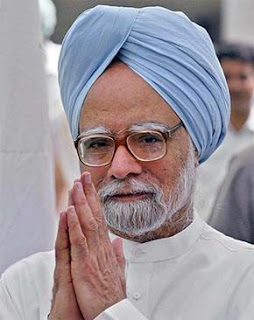
Manmohan Singh-Prime Minister of India is to-14

Manmohan Singh
Manmohan Singh
Dr. Manmohan Singh, the Prime Minister of India is to-14. He was born in Gah, West Punjab (now Pakistan), 26 September 1932; age 79 years, is a member of the National Congress Party of India. As prime minister of India's first Sikh ethnicity, Singh was sworn in on May 22, 2004. His mother tongue is Punjabi language.


He was born of poor Sikh family. He moved to the holy Sikh city of Amritsar in northern India when he was 14 years old. His father is a dried fruit peddler in Amritsar. Singh is a serious student learning. Not infrequently he learned to rely on street lights for the house was always violent and frequent power outages. "Our late father often scoff that Manmohan Singh would be prime minister one day because of Singh's harder to learn than others," said Surjit Singh (brother).


He began studying at the University of Punjab in 1948. After completing his undergraduate degree (1952) and get a master's degree (1954) from Punjab University, he earned a bachelor's degree (1957) from University of Cambridge (St. John's College) and his D.Phil (1962) from Oxford University (Nuffield College). He graduated First Class Honours in Economics with a thesis on the importance of the role of exports and export trade in India's economy.


In 1958, Shrimati Gursharan Kaur married and a father of three daughters. Singh to his profession as an economist and has worked at the IMF (International Monetary Fund). He was one of the prime minister of India are well educated. He was awarded the Outstanding Parliamentarian Award in 2002. Before becoming prime minister, he worked in the finance ministry during the reign of Prime Minister Narasimha Rao. He later served as Finance Minister of India in the 1990s, in the event of a financial crisis. He got a job at the UNCTAD Secretariat and the Secretary General of the South Commission in Geneva (1987-1990).


In 1971, Dr. Singh is a member of the Government of India as Economic Advisor in the Ministry of Commerce. This was soon followed by his appointment as Chief Economic Adviser in the Ministry of Finance in 1972. Among the many who have held government positions are Secretary in the Ministry of Finance, Deputy Chairman Planning Commission, the Governor of the Reserve Bank of India, Advisor of Prime Minister and Chairman of the Commission of the University Fund.
He became leader of the opposition in the Upper House in the period 1998 - 2004 when India was ruled by a coalition of center-led Bharatiya Janata Party.

In the decade of the 1990s, he was dubbed the architect behind the reform of the Indian economy. He represented India at many international conferences and at several international organizations. He led the Indian delegation at the Commonwealth Heads of Government Meeting in Cyprus (1993) and the World Human Rights Conference in Vienna in 1993 and has been a member of the Parliamentary Assembly of Upper India (the Rajya Sabha) since 1991 and Leader of the Opposition between 1998-2004.
Period 1991-1996, he served as Minister of Finance in the government of Prime Minister PV Narasimha Rao to rescue the economy amburandul balance of payments crisis. Her role in the improvement of India's economic policy leads observers recognized the world. Singh does not look like a politician and lost the parliamentary elections in 1999. In fact, he's never won an election and never sat in parliament.


Singh won seats in the Lok Sabha from the south of Delhi in 1999. He became prime minister of India because the members of the Lower House of Parliament approved it. He is also a member of the Rajya Sabha from Assam since 1991. In times of political keguncangan, he was appointed Chairman of the First Congress Party Sonia Gandhi to mengisisi position of prime minister.
Before becoming finance minister, Singh served as Governor of the Central Bank of India. He obtained all the position after more than a decade of teaching at various universities in India and worked at the United Nations. India is regarded as one of the new growth location public knowledge that he was the thinker behind the current economic reform campaign finance ministers emerged as the Congress Party government.


He changed into the domestic-oriented economy into the open. It was able to make India's economy grew an average of 2-3% to an average of 6%. Singh opened the economy to foreign investment and trade barriers memangn cash. "The state is being threatened and there is no time to be missed in vain," he said in Parliament of India in 1991 when the Indian economy experienced a major problem. He then reduce subsidies and privatize the company in some countries.
He forced businesses to obtain government approval for any decisions. "If you manage the economy as a rigid and closed to the outside world, there would not be stimulated to reproduce and bring new ideas," he said. Incoming foreign investment, reduced inflation from 17% to 8.5% which was then only 4%. In a country that runs like the Soviet economic system, such action marks the beginning of India's economic revolution.


Nevertheless, he is a wild opponents of economic liberalization and believe that the market can not be fully trusted to bring prosperity to the poor of India. "It takes a human development policy," he said. He said, India needs emancipation from war, desire, and exploitation.


Dr career. Manmohan Singh

First Class Honours in Economics, University of Cambridge, (1957)
Punjab University, Chandigarh, India
Senior Lecturer, Economics (1957-1959)
Professor of International Trade (1969-1971)
Lecturer (1959-1963)
Professor (1963-1965)
D.Phil in Economics, Nuffield College of Oxford University, (1962)
Delhi School of Economics, University of Delhi
Honorary Professor (1996)
Chief, Financing for Trade Section, UNCTAD, United Nations Secretariat, New York
1966: Economic Affairs Officer 1966
Economic Advisor, Ministry of Foreign Trade, India (1971-1972)
Chief Economic Advisor, Ministry of Finance, India, (1972-1976)
Honorary Professor, Jawaharlal Nehru University, New Delhi (1976)
Director, Research Bank of India (1976-1980)
Director, Industrial Development Bank of India (1976-1980)
Secretary, Ministry of Finance (Department of Economic Affairs), Government of India, (1977-1980)
Governor, Bank Research India (1982-1985)
Deputy Chairman, Planning Commission of India, (1985-1987)
Advisor of Prime Minister of India the field of Economic Affairs (1990-1991)
Finance Minister of India, (June 21, 1991 - 15 May 1996)
Leader of the Opposition in Rajya Sabha
Prime Minister of India (22 Mei2004 - Present)


Awards and Work

His book titled India's Export Trends and Prospects for Self-Sustained Growth [Clarendon Press, Oxford, 1964] is an early critique inward-oriented trade policy of India.
Among the many prizes and awards the most outstanding is the second largest civilian honor of India (Padma Vibhushan in 1987), award 100 Year of Birth of Jawaharlal Nehru Indian Science Congress (1995), Asia Money Award for Finance Minister (1993-1994), Euro Appreciation Money for the Minister of Finance (1993), Adam Smith Award from the University of Cambridge (1956), and Special Execution of Award Wrightuntuk St. John's College, Cambridge (1955). Dr. Singh has also been awarded a number of other clubs including from Japan, the Nihon Keizai Shimbun.

Sunday, April 1, 2012

Franz Josef I of Austria Biography

Franz Josef I 
Franz Josef I (also spelled Franz Joseph, born in Vienna, August 18, 1830 - died in Vienna, 21 November 1916 at age 86 years) was Emperor of Austria and King of Bohemia from 1848 to 1916, and Apostolic King of Hungary from 1867 until 1916. It stems from the Habsburg dynasty.

The oldest son of Franz Karl, who is the brother of Emperor Ferdinand I, Franz also is the brother Maximilian I of Mexico. At age 13 he began his career as a colonel in the Austrian army. He became Emperor of Austria when Ferdinand abdicated at the end of the Revolution of 1848, on December 2, 1848. In 1854, Franz Josef married Princess Elizabeth of Bavaria. Their only son, Crown Prince Rudolf, committed suicide in 1889.

When World War I broke out, Austria-Hungary allied with Germany, but their soldiers did not have sufficient preparation and equipment. One reason is the conservative attitude of Franz Josef. He rejected suggestions that the soldiers get new weapons (in this case, tank).
The other three children are Sophie Friederike (1855 - 1858), Gisela (1856 - 1932), and Marie Valerie (1868-1924).

Saturday, March 31, 2012

Franz Ferdinand Biography

Franz Ferdinand
Franz Ferdinand von Habsburg (born December 18, 1863 - died June 28, 1914 at age 50 years) was archduke (primary dukes) of Austria-Hungary and heir to the Austro-Hungarian Empire. He was killed in 1914 in Sarajevo by Gavrilo Princip who is a member of the Black Hand, a group of Serbian nationalists. This incident burst of World War I; however, many other reasons that cause war.

People Austria declared war on Serbia from the assassination.
Franz Ferdinand is the nephew of Emperor Franz Josef of Austria. He became heir to the empire after his cousin Crown Prince Ludwig of suicide and the death of his father Karl Ludwig. He married Princess Sophie Cothek. Their marriage was opposed because Sophie came from the lower circles. Their marriage was allowed for consideration of his children would become the future emperor. Pamandanya, Emperor Franz Joseph, did not come to the wedding. His wife was murdered along with her ​​husband.


Bullet fired by Gavrilo Princip in the assassination of Archduke, sometimes referred to as "the bullet that started World War I", is stored as a museum exhibition in the city KonopistE KonopistE Castle, Czech Republic.

Friday, March 30, 2012

Vladimir Lenin Biography


Vladimir Lenin Vladimir Ilyich Lenin or a pseudonym of Vladimir Ilyich Ulyanov (Russian: Владимир Ильич Ульянов, Vladimir Il'ich Ul'yanov), was born in Simbirsk, Russian Empire, 22 April 1870 - died in Gorki, Russia RSFS, Soviet Union , January 21, 1924 at the age of 53 years, known as the Russian Communist revolutionary, leader of the Bolshevik party, the first prime minister of the Soviet Union, Soviet Union's first head of state is a de facto, and initiator of Leninism.
Lenin's name is actually a pseudonym and is taken from the name of the Lena River in Siberia.


Youth

Vladimir Ilyich Ulyanov was born as the son of Ilya Nikolaevich Ulyanov (1831 - 1924), a Russian civil servant who strive to enhance democracy and free education for all people in Russia. Maria Alexandrovna Blank he beristerikan (1835-1916). Like most Russians, Lenin came from different ethnic groups. He had Kalmyk blood inherited from his parents. And from his mother he inherited German blood Wolga. Besides his mother's father was Jewish (?). Vladimir Ulyanov (Lenin) himself was baptized in the Russian Orthodox church.


At school, the famous Lenin proficient in Latin and Greek. In May 1887 his brother Alexander Ulyanov was hanged for participating in planning the murder of Tsar Alexander III. This makes Vladimir became a radical and he was expelled from Kazan University for participating in student demonstrations. But he taught himself, and in 1891 could get permission to become a lawyer.


Development to become a Revolutionary

In the meantime, while working as a lawyer in Saint Petersburg, he began to recognize the works of Karl Marx and Friedrich Engels. Since the work of Marxism is banned in Russia, Lenin was arrested and jailed for a year. Then he was exiled to Siberia. While in the prison was Lenin showed his talent by beating other inmates in terms of playing chess.
In July 1898, still in Siberia, Lenin married a woman named Nadezhda Krupskaya socialist. In 1899, he wrote a book about the development of capitalism in Russia. In 1900, he was allowed home from Siberia. Then he traveled around Europe and visited the Marxist conferences.
In 1903 Lenin was arguing with the officials and the Social-Democratic Party of Russia on the structure of the Labour party. Julius Martov, a board, want a rather loose structure and autonomous while Lenin wanted a centralized structure. Then the party broke into two. People Lenin called Bolsheviks and that means the majority of people called the Mensheviks Martov meaningful minority.

The Russian Revolution

In February 1917, in connection with the defeat of Russia in World War I, the Tsar Nicholas II was forced to abdicate the throne. And formed a cabinet led by Alexander Kerensky. On 16 April 1917, Lenin returned to Petrograd, the name of Saint Petersburg who has di'Rusia' out.
Then in July, Lenin attempted to organize a revolt of the workers. But this revolt failed, and Lenin fled to Finland. In October 1917 he returned again and tried to hold the October Revolution. At this time he succeeded, on 7 November 1917 according to the Gregorian calendar or a chronicle of October 25, according to the Julian era, revolution and Kerensky had managed to escape.


On August 30, 1918, Lenin was shot by Fanya Kaplan, a revolutionary woman as well, as much as three times. Kaplan considers Lenin had betrayed the Russian Revolution. Lenin survived but his health began to decline and never recovered. Finally, he died on January 21, 1924 after a stroke four times.

Leonid Brezhnev Life Story


Leonid Brezhnev 
Leonid Ilyich Brezhnev; December 19 [KJ: December 6] 1906-10 November 1982) was the Secretary General of the Communist Party of the Soviet Union who came to office in 1964 until his death in 1982. Term of office for eighteen years as secretary-general made ​​the second longest-led Soviet Union after Josef Stalin.
At the time of Brezhnev leadership, global influence of the Soviet Union increased sharply, mainly due to the expansion of Soviet military at the time. However, his position as a leader is often criticized as the beginning of the period of economic stagnation to ignore thorny economic problems that eventually lead to the dissolution of the Soviet Union in 1991.
Brezhnev also had twice served as Chairman of the Presidium of the Supreme Council of the Soviet Union, each of the years 1960-1964 and 1977-1982. The second period was adopting the same position having served as secretary-general

Boris Yeltsin-The First President Russian Federation

Boris Yeltsin
Boris Nikolayevich Yeltsin was born February 1, 1931 - died 23 April 2007 at age 76 years) performed the first to the position of President of the Russian Federation, held in 1991-1999. He was born in Sverdlovsk (now Yekaterinburg), the Russian Soviet Republic, the Soviet Union and the Russian president during the post-Soviet Union.

Political history

Yeltsin era was a dramatic period in Russian history - a period marked by revolutionary political change, democracy - along with the major political and social issues, one of which is rampant and open corruption.
In the June 1991 Yeltsin came to the throne along with the wave of high expectations for political reform and disillusionment with communist rule.
On June 12 Yeltsin was elected president of the Russian Soviet Socialist Republic was formed into a federation with 57% of the vote, becoming the first president directly elected in Russian history.
In August 1991, Yeltsin gain international acclaim since he was a brave and as a democrat able to resist the attempted coup by Communist hardliners. This finally brought the collapse of communism but also the destruction of the Soviet Union, but makes Yeltsin as the strongest man in the Kremlin.
Unfortunately, he himself became an autocratic authoritarian and never regained his popularity and he leaves office on December 31, 1999 as a hated person. He was replaced by Vladimir Putin.
He died on 23 April 2007 due to heart failure.

William The Conqueror Biography


William The Conqueror 
William I of England (around 1027-9 September 1087), also known as William the Conqueror (French: Guillaume le Conquérant) or William of Normandy. He was born in Falaise, a town in Normandy, France.
William the Conqueror led the attack on the Normans, Bretania, Flanders, and France against England, because he claimed that Edward the Confessor had promised him before his death became the successor to the throne of England. But Harold Godwindson also claimed the throne, so that sparked the fighting in Hastings. British troops under the leadership of Harold defeated after a win at Stamford Bridge to face Normadia. William became King of England when he had won the Battle of Hastings in 1066.


William married Matilda of Flanders in 1053. William is known to have nine children, though a daughter named Matilda, who died ten virgins when it is mentioned in several sources. Several other girls also mentioned his name not be explained with figures engaged nobility at that time.
William died when he was in Rouen, France, from wounds he sustained from a fall from a horse. He was replaced by his son William II of England.

Wednesday, March 28, 2012

Sepp Blatter-FIFA President to-8


Sepp Blatter


Joseph "Sepp" Blatter (born in Visp, Valais, Switzerland, March 10, 1936, age 76 years) is the eighth FIFA President. He was sworn in on June 8, 1998, replacing João Havelange (Brazil).
Graduate of the University of Lausanne in the field of Administration and Economics (Faculty of Law), Blatter had worked at the National Tourism Valais, Swiss Ice Hockey Federation, and Longines SA. He began working at FIFA in 1975, as Technical Director (1975-81), Secretary General (1981-98), and then President (since 1998). He was re-elected as president in 2002 (defeating Issa Hayatou) and again in 2007.


Between the policies that made ​​the President of FIFA is the introduction of the silver goal system to replace the golden goal (since Euro 2004; system is then terminated along with the golden goal that every game now play an additional half full); omission of an automated, qualifying for the FIFA World Cup champion last after Cup 2002 FIFA world; various changes related to moral standards, for example, giving yellow cards for players who take her clothes off after celebrating a goal of printing.
Blatter spoke German, French, English, Spanish, and Italian.

Early life and career

Blatter was born in Visp, Canton of Valais, Switzerland. He studied in Sion, Switzerland, before he received a degree in business and economics from the University of Lausanne in 1959.
Blatter has had a long and varied career, including posts as Head of Public Relations Valaisan Tourist Board in his native Switzerland, as well as Secretary General of the Swiss Ice Hockey Federation. He is Director of Sports Time and Relationship Longines SA, and is involved in the organization in 1972 and 1976 Olympics.


FIFA

Since 1975, FIFA's Blatter has worked at first as Technical Director (1975-1981), then the Secretary General (1981-1998), before being elected as President of FIFA in 1998. He was re-elected as head of FIFA in 2002, and was re-elected unopposed for four years on May 31, 2007, although only 66 207 FIFA members nominated him

Tuesday, March 27, 2012

Kofi Annan Life Story

Kofi Annan


Kofi Atta Annan (born in Kumasi, Ghana, 8 April 1938, age 73 years) is a Ghanaian diplomat who appeared as the seventh Secretary-General of the United Nations in the period January 1, 1997 until December 31, 2006  for two terms of five yearly. On January 1, 2007, he was replaced Ban Ki-moon. He never won the Nobel Peace Prize in 2001. Since June 2007, he led the Alliance for a Green Revolution in Africa, an organization aimed at improving agricultural production and plantation in Africa as well as the fight against hunger, lack of clean water supplies and soil erosion. Organization was created in 2006 by Bill and Melinda Gates Foundation and the Rockefeller Foundation with a grant of 150 million USD.

Background and family

Kofi Annan, son of Henry Reginald and Victoria Annan, who was born in the Kofandros Kumasi, Ghana. The name "Kofi" means "born on Friday". Annan was born as twins are considered a special event by the traditions of Ghana. His twin brother (Efua) died in 1991.
Annan's family was part of an elite group of Ghana. Both his grandfather and uncle were tribal chiefs. Her father was half Asante and half-blooded Fante, while his mother was Fante tribe. Annan's father worked for a long time as the export manager of Lever Brothers cocoa company.


Education

From the year 1954-1957, Annan attended the elite school Mfantsipim, a Methodist boarding school in Cape Coast which was founded in the 1870s. Annan has said that his school teaches that the "suffering anywhere concerns people everywhere." In 1957, when he graduated from Mfantsipim, Ghana became the first British colony in sub-Saharan independence.
In 1958, Annan began studying for a degree in economics reach the High School of Science and Technology Kumasi, which has changed its name to University of Science and Technology Kwame Nkrumah. He obtained a Ford Foundation scholarship to help him complete his studies at Macalester College in St. Petersburg. Paul Minnesota, the United States in 1961.
He then continued his studies at the Institut Universitaire des etudes ahutes Internationales in Geneva (Switzerland) in the period 1961-1962, and then follow the Sloan Fellows program at MIT Sloan School of Management (1971-1972) and received his Master of Sciende.


Annan is fluent in English, French, Kru, other dialects of the Akan languages, and other African languages.
He is married to Nane Maria (Lagergren) Annan, of Sweden, a lawyer and artist who is the niece of Raoul Wallenberg's half. Annan had two children, Kojo Annan and Ama, from previous marriage with Titi Alakija, a Nigerian woman. He is divorced with Alakija in the late 1970's. Nane Annan also has a child, Nina Cronstedt de Groot, from a previous marriage.


Early career

In 1962, Annan worked as an employee of the budget for the World Health Organization (WHO), a UN agency. From 1974-1976, he worked as Director of Tourism in Ghana. After that, he worked again at the United Nations as Assistant Secretary-General in three consecutive positions: Human Resources Management and Security Coordinator (1987-1990), Program Planning, Budget and Finance, and Controller (1990-1992), and Peacekeeping Operations ( March 1993-February 1994).


In his book Shake Hands with the Devil: The Failure of Humanity in Rwanda (Shake Hands with the Devil: The failure of Humanity in Rwanda), former General Romeo Dallaire, who served as commander of the UNAMIR forces claim that Annan was too passive in response to the 1994 Tutsi genocide in Rwanda. Jen. Dallaire openly said that the Deputy Secretary-General for Peacekeeping Operations to prevent UN troops to intervene in resolving the conflict and to provide more logistical and material support. For example, he claims that Annan failed to respond to a fax sent Dallaire repeatedly asked to be given access to the armory, which should be able to help defend the Tutsi tribe.


But Dallaire acknowledges that Annan is a man who feels very "high commitment" to the principles of the UN establishment.
Annan was then Deputy Secretary-General until October 1995 when he was appointed as Special Envoy of UN Secretary Jendearl to the former Yugoslavia. He served for five months in this capacity and return to his duties as Deputy Secretary-General in April 1996.


UN Secretary-General

On December 13, 1996, Annan was elected by the UN Security Council as Secretary-General, and confirmed four days later by a vote in the General Assembly. Annan immediately took the oath of office, and first began his term as Secretary-General on January 1, 1997. The Secretary-General Annan to replace Boutros Boutros-Ghali of Egypt, who ended his tenure. He became the first of a Black African who served as Secretary General.


The term of office as Secretary-General Annan updated on January 1, 2002, in an unusual deviation from the policy unofficially. This office usually rotates among the continents, each with two terms. Because the predecessor Boutros-Ghali Annan is also derived from the African, Annan normally would only serve one term in office. Extension of his term shows the popularity of Annan.
Mark Malloch Brown to replace Louise Frechette as Deputy Secretary Jendearl Annan in April 2006.


Appreciation


Doctorate of Law from the National University of Ireland (January 22, 1999).
Doctorate Honoris Causa from the University of Technology Dresden, Germany (March 9, 2004).
Doctorate Honoris Causa from the University of Frei Berlin, July 13, 2001.
Doctorate Honoris Causa from the University of Ghent (Flanders), March 21, 2003.
Honorary Doctorate in Law from Carleton University (March 9, 2004).
Doctorate from the University of Ottawa University on March 9, 2004.
Doctorate of Law honoris causa from the University of Pennsylvania, May 16, 2005.

Ariel Sharon-Prime Minister Israel to -11

Ariel Sharon


Ariel Sharon (born February 27, 1928, age 84 years) is an Israeli politician and general.
He served as Prime Minister of Israel from March 7, 2001 to 14 April 2006. His power as prime minister was replaced by Prime Minister (temporary) Ehud Olmert since he suffered a stroke in January 2006. He was in a coma for a long time, so it is possible can not be re-running tasks as government leaders.


He was born in Kfar Malal (British Mandate of Palestine) and appeared as a political leader and military Israeli nationality. Sharon was also the leader of Likud, the largest party in the coalition government in the Israeli parliament, Knesset, until he resigned from the party on 21 November 2005. He then formed a new party called Kadima.
For thirty years Sharon served as a member of the Israel Defense Forces. Is the highest rank of Major General. He became famous in Israel for his involvement in the Six Day War in 1967 and the Yom Kippur War in 1973.


Ariel Sharon is also responsible for the tragedy of the massacre Qibya on October 13, 1953 at which time 96 Palestinians were killed by Unit 101 and led the massacres of Sabra and Shatila in Lebanon in 1982 which resulted in between 3000-3500 people were killed, so he was dubbed the 'Junior Butcher of Beirut '.


Early life and military career

He was born with the name Ariel Scheinermann (Shinerman) from a family of supporters of the Zionist movement. At the age of 17, he joined the Haganah mafia groups whose activities are terrorizing the Palestinian people. In the conduct of terrorist acts, he in turn was under the command of Prime Minister David Ben Gurion, Itzhak Shamir and Yitzhak Rabin.


At the time of Israel's independence war in 1948, at the age of 20, he had become a commander in the Israeli infantry brigade Alexandroni. By the time he was about to set fire to a field, a sudden barrage of bullets into his body Palestinians. The wound was nearly fatal had he not saved his. Later that year, he continued his studies in law at the Hebrew University in Jerusalem. In 1953, he formed a special commando unit as well as leading the "Unit 101" is assigned to conduct special operations high level.


He was appointed commander of the corps and para-commandos involved in the war for the Sinai in 1956. In 1957, he continued his military service education in the Camberley Staff College, UK.
During the years 1958-1962, Sharon was once the commander of the Infantry Brigade, Infantry led the Education Center and follow the law school at the University of Tel Aviv. In the Six Day War (1967) involving Israel against the Arabs, he served as commander of an army division to Brigadier General. Later, he resigned from the army in 1972. When there is Yom Kippur War in 1973, he was called upon to lead an army division to cross the Suez Canal.


Political career


His political career began in 1973 when he was elected to the Knesset. However, he resigned a year later to become National Security Advisor to Prime Minister Yitzhak Rabin. He returned to the Knesset in 1977 and accepted a position as Minister of Agriculture. Later, he served as Minister of Defense (1981-1983) when the Lebanon war raged when Israeli troops entered Lebanon on his orders.


Ariel Sharon then resigned when a government commission accused him indirectly involved in the September 1982 attacks on the Palestinian refugees in Sabra and Shatila by Lebanese Maronite militia. Victim in this incident reached over 3,000 people were killed. In addition, he was responsible for the tragedy of October 13, 1953 Qibya massacre that killed 96 Palestinians by Unit 101 leads. Of two such events, some people called him the "Butcher of Beirut".


Period 1984-1990, he re-entered the cabinet and served as Minister of Industry and Trade. After that, for two years, he became Minister of Housing and Construction. Period July 1996-July 1999, he served as Minister of National Infrastructure and the Minister of Foreign Affairs (October 1998-July 1999). At the session of the Knesset in May 1999, he was elected as Chairman of the Likud Party following the resignation of Prime Minister Benjamin Netanyahu. His political career peaked when he was elected Prime Minister of Israel in February 2001.


In the midst of a very tight guard, Ariel Sharon raised the oath of office as prime minister-11 in front of the Knesset Forum on March 7, 2001. Swearing-in after he succeeded in forming a national unity government with the political spectrum of the most extensive in the history of Israel. Led coalition to achieve two basic agreement concerning the future of peace.
Step withdrawal from Gaza raises serious opposition in the party, while a change in the Labour Party leadership. Chairman of the Labor Party seat switch from Shimon Peres to Amir Peretz. He responded with a backward step from the Likud Party (21 November 2005) to form a new party called Kadima the centrist wing.


Sharon Health

On December 18, 2005 Sharon suffered a mild stroke and was taken to the hospital. He was hospitalized for two days and is scheduled to undergo surgery on his heart on January 5, 2006. But on January 4, 2006 he re-entered the hospital from his ranch in the Negev. Apparently he had a stroke back, and this time it seems rather severe. Along with the stroke, Sharon suffered a cerebral hemorrhage. Sharon underwent seven hours of surgery to stop bleeding and remove blood that collects in the brain. He was admitted to the intensive care unit and would be highly unlikely to return to the political arena, even if he managed to survive.


Meanwhile, his duties as prime minister was transferred to Deputy Prime Minister Ehud Olmert, who currently serves as Acting Prime Minister.
Key members of the Kadima Party said they would support Olmert. This reduces the concern that the movement, founded by Sharon two months ago, will crack if Sharon does not exist. A new poll showed Kadima would win the March 28 elections under the leadership of Olmert.
Palestinian leaders, who held their own election on January 25, saying that they are associated with Israeli officials to follow Sharon's condition. "We are monitoring the situation closely," said Palestinian negotiator Saeb Erekat.
The health condition of Ariel Sharon made a lot of the misgivings and concerns about the future of the Middle East peace plan. Sharon's policy to conduct its withdrawal from the Gaza Strip and West Bank is believed a number of parties as a step forward towards peace with the Palestinians. But these policies are many challenges from the right in Israel.


On February 11, 2006, his condition worsened and she again had to undergo emergency surgery after badly damaged digestive system.

On 11 April 2006, the Cabinet of Israel lifted Olmert as Prime Minister while the effect from the 14th of April, unless Sharon's health improves. On April 14, Sharon declared "unable to continue", has been 100 days since he was hospitalized. Olmert thus officially replace him on that day.

Colin Powell-Minister of Foreign Affairs of the United States to-65

Colin Powell


Colin Luther Powell, was born in New York City, New York, USA, 5 April 1937; age 74 years) U.S. Secretary of State is the 65th which was inaugurated on January 20, 2001. She was nominated by George W. Bush on December 16, 2000 and was chosen unanimously by the U.S. Senate. President accepted his resignation on 12 November 2004 (before the start of the second term of Bush), but Powell still continue to serve until his successor, Condoleezza Rice is set by the U.S. Senate on January 26, 2005. Powell also served as U.S. National Security Advisor (1987-89) and Chairman of the U.S. Chief of Staff (1989-93).


Personal background

Powell was born in New York City and raised in the South Bronx. His parents, Luther Theophilus and Maud Ariel Powell, emigrated to the U.S. from Jamaica. Powell studied at New York City public schools, graduated from City College of New York (CCNY), where he earned a bachelor's degree in geology.
He also participated in ROTC at CCNY and earned the rank of second lieutenant U.S. Army after graduating in June 1958. Other academic achievements include an MBA from George Washington University.
Powell is married to Alma Vivian Johnson Powell, who comes from Birmingham, Alabama. He had a son, Michael (who had become chairman of the Federal Communications Commission), daughters Linda and Anne; daughter Jane, and grandsons Jeffrey and Bryan.
Close calls President George W. Bush to Powell is Balloonfoot.
Powell is famous as the person who encouraged the U.S. invasion of Iraq in 2003 after showing "evidence" of weapons of mass destruction in Iraq in the UN General Assembly that it did not exist.

Debra Opri,famous Lawyer in America

Debra Opri

Opri Debra Ann (born June 10, 1960) was an American lawyer.
Debra Opri is an attorney who gained a reputation as a celebrity lawyer when he successfully represented James Brown against sexual harassment lawsuit by a former employee. Other high-profile clients have included Michael Jackson's parents, Joseph Jackson and Katherine Jackson, who hired Opri to protect their interests after their son was charged with child abuse, and Pamela Bach Hasselhoff and Jermaine Jackson in their divorce.


A nationally known attorney, Debra Opri gained international attention as the lawyer who sued Anna Nicole Smith in action with his ex-girlfriend's father. Debra Opri managed to secure the rights of fathers and fathers in custody, Gaining from her daughter, Dannilynn, after Anna Nicole died in February 2007.
Debra Opri continued to represent celebrity clients, including entertainers, Kevin Hart, and clients from diverse backgrounds such as, including those that require media capabilities and experience in the legal forum.


Debra Opri is licensed to practice law in California, New York, New Jersey, and the District of Columbia [DC], and is the founder's Lawfirm, Opri & Associates, APLC, located in Beverly Hills, California. Debra Opri continues to practice law through Lawfirm, and continues to be a media personality in the current legal cases and issues, with regular broadcast television.