Showing posts with label Biology Figure. Show all posts

Friday, April 6, 2012

Hernando De Soto,Informal Economic Leaders

Hernando De Soto
Hernando De Soto


Hernando De Soto Biography
Hernando de Soto (born 1941 in Arequipa) is a Peruvian economist known for his thoughts on the informal economy. Currently he serves as director of the Institute for Liberty and Democracy (Institute for Liberty and Democracy, ILD) in Lima, Peru.


Work

Hernando De Soto in 2000 authored a book titled "The Mystery of Capital" that feed into the disciplines of economics and economic activities of developing countries. Soto is the founder and leader of the Institute of Liberty and Democracy (ILD), an agency independent research institute located in Peru. Economist magazine stated that this institution is the second most important research centers in the world. Hernando Time magazine chose as one of the foremost innovators of Latin America. Evidence to explain why developing countries have never been out of the problems of poverty.

In this book mentioned that the real property owned by the developing countries are numerous. The absence of the legal system and good governance to make this wealth is not being tracked and recorded into the receiving State. Corruption and collusion and corruption practices law making property owned many developing countries is meaningless. Without a clear legal system Developing countries will still lag behind developed countries the advantages lie in the established legal system.

Clear legal system will make all kinds of property owned by the State either public or private will be recorded by the authorities. Thus management can be monitored and encouraged to continue to grow well. The process of recording and management of resources it would require an honest man and responsible. They gathered in a legal institution that is also honest and responsible.

The main idea promoted in the writings of de Soto is a community in the developing world generally do not have formal land tenure system is integrated, so that only informal ownership of land and goods. In the book Mystery of Capital, de Soto used the work of John R. Searle's The Construction of Social Reality. Here he discusses the social relations that are needed in the form of capital and make money. De Soto argues that the basis for economic success of Japan and American capitalism rooted in a clear system of property rights that have been made since the days before World War I. According to de Soto, modern development theory fails to understand the process of developing an integrated system of property rights so as to make the poor may not be able to use what they have informally for use as capital in building a business and entrepreneurship. As a result, a group of farmers in the developing world are always trapped in poverty, in which farmers can only grow to the needs of his own life.


The Other Path: Invisible Revolution in the Third World (1989), translated from the Spanish El Otro Sendero titled (1986).
The Mystery of Capital: Why Capitalism triumphs in the West and Fails Everywhere Else (2000)
The Other Path: The Economic Answer to Terrorism (2002)

Wednesday, April 4, 2012

Sonia Gandhi -Women Politician From India

Sonia Gandhi
Sonia Gandhi (born in Lusiana, Italy, December 9, 1946, age 65 years), or his real name Antonia Albina Maino Edvige, is Italian-born Indian politician, President of the First Congress, and the widow of former Indian Prime Minister Rajiv Gandhi. As the United Progressive Alliance Chairperson in the Lok Sabha, he resigned on March 23, 2006. His name is included in the top three rankings as a politician in the world's most powerful woman by Forbes magazine in 2004.

However, that ranking has fallen sharply, by 2005, that no longer Forbes ranked her in the top 100 most powerful women. She was returned to Parliament by a margin of over 400.000 votes in the recently held by-election for Rae Bareilly. According to a poll conducted by The Hindu newspaper with CNN-IBN, he is the most popular politician in 2006. Sonia declined the post of prime minister, though his party won elections in 2004. As many as 28 percent of respondents considered most appropriate Sonia held the post of prime minister, while Prime Minister Manmohan Singh gained 12 percent.

Being, the former Prime Minister Atal Bihari Vajpayee being displaced from his post in elections 2004 India ranked second with 18.5 percent. Sonia Gandhi declined the post of PM after the emergence of the opposition Hindu nationalist who considered himself not a native Indian descent. His decision was actually invited the sympathy of the people of India.

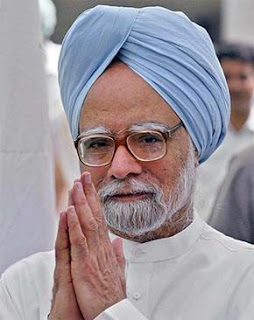
Manmohan Singh-Prime Minister of India is to-14

Manmohan Singh
Manmohan Singh
Dr. Manmohan Singh, the Prime Minister of India is to-14. He was born in Gah, West Punjab (now Pakistan), 26 September 1932; age 79 years, is a member of the National Congress Party of India. As prime minister of India's first Sikh ethnicity, Singh was sworn in on May 22, 2004. His mother tongue is Punjabi language.


He was born of poor Sikh family. He moved to the holy Sikh city of Amritsar in northern India when he was 14 years old. His father is a dried fruit peddler in Amritsar. Singh is a serious student learning. Not infrequently he learned to rely on street lights for the house was always violent and frequent power outages. "Our late father often scoff that Manmohan Singh would be prime minister one day because of Singh's harder to learn than others," said Surjit Singh (brother).


He began studying at the University of Punjab in 1948. After completing his undergraduate degree (1952) and get a master's degree (1954) from Punjab University, he earned a bachelor's degree (1957) from University of Cambridge (St. John's College) and his D.Phil (1962) from Oxford University (Nuffield College). He graduated First Class Honours in Economics with a thesis on the importance of the role of exports and export trade in India's economy.


In 1958, Shrimati Gursharan Kaur married and a father of three daughters. Singh to his profession as an economist and has worked at the IMF (International Monetary Fund). He was one of the prime minister of India are well educated. He was awarded the Outstanding Parliamentarian Award in 2002. Before becoming prime minister, he worked in the finance ministry during the reign of Prime Minister Narasimha Rao. He later served as Finance Minister of India in the 1990s, in the event of a financial crisis. He got a job at the UNCTAD Secretariat and the Secretary General of the South Commission in Geneva (1987-1990).


In 1971, Dr. Singh is a member of the Government of India as Economic Advisor in the Ministry of Commerce. This was soon followed by his appointment as Chief Economic Adviser in the Ministry of Finance in 1972. Among the many who have held government positions are Secretary in the Ministry of Finance, Deputy Chairman Planning Commission, the Governor of the Reserve Bank of India, Advisor of Prime Minister and Chairman of the Commission of the University Fund.
He became leader of the opposition in the Upper House in the period 1998 - 2004 when India was ruled by a coalition of center-led Bharatiya Janata Party.

In the decade of the 1990s, he was dubbed the architect behind the reform of the Indian economy. He represented India at many international conferences and at several international organizations. He led the Indian delegation at the Commonwealth Heads of Government Meeting in Cyprus (1993) and the World Human Rights Conference in Vienna in 1993 and has been a member of the Parliamentary Assembly of Upper India (the Rajya Sabha) since 1991 and Leader of the Opposition between 1998-2004.
Period 1991-1996, he served as Minister of Finance in the government of Prime Minister PV Narasimha Rao to rescue the economy amburandul balance of payments crisis. Her role in the improvement of India's economic policy leads observers recognized the world. Singh does not look like a politician and lost the parliamentary elections in 1999. In fact, he's never won an election and never sat in parliament.


Singh won seats in the Lok Sabha from the south of Delhi in 1999. He became prime minister of India because the members of the Lower House of Parliament approved it. He is also a member of the Rajya Sabha from Assam since 1991. In times of political keguncangan, he was appointed Chairman of the First Congress Party Sonia Gandhi to mengisisi position of prime minister.
Before becoming finance minister, Singh served as Governor of the Central Bank of India. He obtained all the position after more than a decade of teaching at various universities in India and worked at the United Nations. India is regarded as one of the new growth location public knowledge that he was the thinker behind the current economic reform campaign finance ministers emerged as the Congress Party government.


He changed into the domestic-oriented economy into the open. It was able to make India's economy grew an average of 2-3% to an average of 6%. Singh opened the economy to foreign investment and trade barriers memangn cash. "The state is being threatened and there is no time to be missed in vain," he said in Parliament of India in 1991 when the Indian economy experienced a major problem. He then reduce subsidies and privatize the company in some countries.
He forced businesses to obtain government approval for any decisions. "If you manage the economy as a rigid and closed to the outside world, there would not be stimulated to reproduce and bring new ideas," he said. Incoming foreign investment, reduced inflation from 17% to 8.5% which was then only 4%. In a country that runs like the Soviet economic system, such action marks the beginning of India's economic revolution.


Nevertheless, he is a wild opponents of economic liberalization and believe that the market can not be fully trusted to bring prosperity to the poor of India. "It takes a human development policy," he said. He said, India needs emancipation from war, desire, and exploitation.


Dr career. Manmohan Singh

First Class Honours in Economics, University of Cambridge, (1957)
Punjab University, Chandigarh, India
Senior Lecturer, Economics (1957-1959)
Professor of International Trade (1969-1971)
Lecturer (1959-1963)
Professor (1963-1965)
D.Phil in Economics, Nuffield College of Oxford University, (1962)
Delhi School of Economics, University of Delhi
Honorary Professor (1996)
Chief, Financing for Trade Section, UNCTAD, United Nations Secretariat, New York
1966: Economic Affairs Officer 1966
Economic Advisor, Ministry of Foreign Trade, India (1971-1972)
Chief Economic Advisor, Ministry of Finance, India, (1972-1976)
Honorary Professor, Jawaharlal Nehru University, New Delhi (1976)
Director, Research Bank of India (1976-1980)
Director, Industrial Development Bank of India (1976-1980)
Secretary, Ministry of Finance (Department of Economic Affairs), Government of India, (1977-1980)
Governor, Bank Research India (1982-1985)
Deputy Chairman, Planning Commission of India, (1985-1987)
Advisor of Prime Minister of India the field of Economic Affairs (1990-1991)
Finance Minister of India, (June 21, 1991 - 15 May 1996)
Leader of the Opposition in Rajya Sabha
Prime Minister of India (22 Mei2004 - Present)


Awards and Work

His book titled India's Export Trends and Prospects for Self-Sustained Growth [Clarendon Press, Oxford, 1964] is an early critique inward-oriented trade policy of India.
Among the many prizes and awards the most outstanding is the second largest civilian honor of India (Padma Vibhushan in 1987), award 100 Year of Birth of Jawaharlal Nehru Indian Science Congress (1995), Asia Money Award for Finance Minister (1993-1994), Euro Appreciation Money for the Minister of Finance (1993), Adam Smith Award from the University of Cambridge (1956), and Special Execution of Award Wrightuntuk St. John's College, Cambridge (1955). Dr. Singh has also been awarded a number of other clubs including from Japan, the Nihon Keizai Shimbun.

Sunday, April 1, 2012

Franz Josef I of Austria Biography

Franz Josef I 
Franz Josef I (also spelled Franz Joseph, born in Vienna, August 18, 1830 - died in Vienna, 21 November 1916 at age 86 years) was Emperor of Austria and King of Bohemia from 1848 to 1916, and Apostolic King of Hungary from 1867 until 1916. It stems from the Habsburg dynasty.

The oldest son of Franz Karl, who is the brother of Emperor Ferdinand I, Franz also is the brother Maximilian I of Mexico. At age 13 he began his career as a colonel in the Austrian army. He became Emperor of Austria when Ferdinand abdicated at the end of the Revolution of 1848, on December 2, 1848. In 1854, Franz Josef married Princess Elizabeth of Bavaria. Their only son, Crown Prince Rudolf, committed suicide in 1889.

When World War I broke out, Austria-Hungary allied with Germany, but their soldiers did not have sufficient preparation and equipment. One reason is the conservative attitude of Franz Josef. He rejected suggestions that the soldiers get new weapons (in this case, tank).
The other three children are Sophie Friederike (1855 - 1858), Gisela (1856 - 1932), and Marie Valerie (1868-1924).

Monday, March 12, 2012

Biography of Professor Abdus Salam - Muslim Physicist

Professor Abdus Salam


Prof. Abdus Salam was born on January 29, 1926 in Jhang, a small town in Pakistan, in 1926. He is the best Muslim physicists of the 21st century. Her father is an employee in the Department of Education in agricultural areas. Abdus Salam families have a tradition of learning and pious. Only unfortunately, the Ahmadiyya Muslim Jamaat he entered from Qadian, who believe the second coming of the Messiah, Jesus promised that the second time, Imam Mahdi, as well as a religious in the 14th century in the Islamic Calendar H in the form of Mirza Ghulam Ahmad, so that the flow is considered a non-Muslim minorities in Pakistan. As a result, until his death in 1996, he was never officially awarded by the government of Pakistan.


In a very young age (22 years) won Salam theoretical physicist with a doctorate summa cum laude at the University of Cambridge, at once took Professor of physics at the University of Punjab, Lahore. Especially for math lessons he even reached the average value of 10 at St.John 's College, Cambridge. Salam is one of four Muslims who had won the Nobel Prize. The other three Egyptian President Anwar Sadat (Peace Nobel 1978), Naguib Mahfoud (Nobel Literature 1988), Palestinian President Yasser Arafat (along with two colleagues from Israel, Nobel Peace Prize 1995).


Recipient of Doctor of Science Honoris Causa degrees from 39 universities / scientific institutions from around the world, which I once referred to himself as the successor to scientists muslim thousand years ago, has stated unequivocally: self-esteem of a people now depend on the creation of scientific and technological achievements. Self-esteem was, as has been evidenced by Salam himself not only able to lift a community level with other communities. Movement science and technology to create participation will contribute to the enhancement of human dignity of all people, regardless of the origin of religion and nationality. That lil rahmatan alaamin.


Muslim physicist Abdus Salam was the most prominent of this century. He was among the first to change the view of the physicists in view parsialisme fifth fundamental force of nature that play a role in this. Namely, the electric force, magnetic force, gravity, strong force that holds protons and neutrons in the nucleus remained close, and the weak force which, among other reactions responsible for the slow decay of radioactive nuclei. During the five centuries of style was understood in isolation in the framework of the argument and postulatnya different.

The unity of the interaction forces are formulated by a trio of Abdus Salam, Sheldon Lee Glashow, Steven Weinberg in the theory of "Unifying the Forces". According to the theory that 1967 was announced, the current weakness in the nucleus is mediated by three particles, each of which emits a powerful stream or style. Twelve years later the law that gave birth to Nobel Prize in Physics 1979.

The existence of three particles that have been demonstrated experimentally in 1983 by a research team led by Carlo Rubia director of CERN (Europeen de Recherche Nucleaire Cetre) in Geneva, Switzerland. Apparently, the pilot was later Regards


inspire other physicists when developing the latest cosmological theories such as Grand Theory (GT), announced the U.S. scientist and his Theory of Everything Stephen Hawking. Through the two theories that, physicists and cosmologists of the world are now eager to explain the secrets of the creation of the universe in one single theory intact. Because of tremendous intelligence, Salam once called home by the Government of Pakistan. During the eleven years since 1963 he became adviser to the President of Pakistan Ayub Khan specifically to handle the development of science and technology in the country. He resigned from his position in government when Zulfiqar Ali Bhutto rose to PM Pakistan. Professor Salaam could not receive treatment Ali Bhutto who issued the Law of the minority Muslim Ahmadiyya non-Muslim community where he was born and raised.

There was no feeling of resentment that could bear on the Affairs of Hostilities Salam Pakistan. He chose to go in peace to spread to the World of Science and Humanity throughout. Was demonstrated by most of the age spent as professor of physics at Imperial College of Science and Technology, London, from 1957-1993. Since 1964 he became senior researcher at the International Centre for Theoretical Physics (ICTP) in Trieste, Italy, as well as a director for 30 years.

Until the end, Pakistan's best sons had no less than 39 honorary doctorates. Among others, from the University of Edinburgh (1971), University of Trieste (1979), University of Islamabad (1979), and prestigious universities in Peru, India, Poland, Jordan, Venezuela, Turkey, the Philippines, China, Sweden, Belgium and Russia. He is also a member and honorary member of the National Academy of Sciences 35 countries in Asia, Africa, Europe and America.

Abdus Salam classified as good ambassadors of Islam. For example, in his bestowal of the Nobel Physics at Karolinska Institute, Sweden, Abdus Salam basmalah starts with sayings. In it he claimed that the research was based on the belief in monotheism sentence. "I hope Unifying the Forces can provide a scientific basis for belief in God the Almighty," the authors said 250 scientific papers that particle physics.


Prof.Abdus Salam, died Thursday, November 21, 1996 in Oxford, England, aged 70 years and is survived by his wife and six children (two boys and four girls). Salam had set off towards the Almighty at the age of 70 years. He is buried in the ground water is very, very loved, city of Rabwah, Pakistan. We are left now only to ask, did we also have a sense of religious pride, like self-esteem that drives the characters are very well respected by the international scientific community? To be sure, the recipient of the degree of Doctor of Science Honoris Causa from 39 universities / scientific institutions from around the world, which I once referred to himself as the successor to scientists muslim thousand years ago, has stated unequivocally: self-esteem of a people now depend on the creation of scientific achievements and technological.
...